
Beyond the ribbon cutting: What’s next after Melbourne Metro?
Melbourne is having a moment. With the opening of a brand-new, generation-shaping metro system, the Australian city is investing in its transport infrastructure like never before. But it’s not only about the major metro networks; projects like the Greenline are transforming the north bank of the Yarra River into a four-kilometre-long public walkway, with space for events, public art, and deep connection to nature along the way.
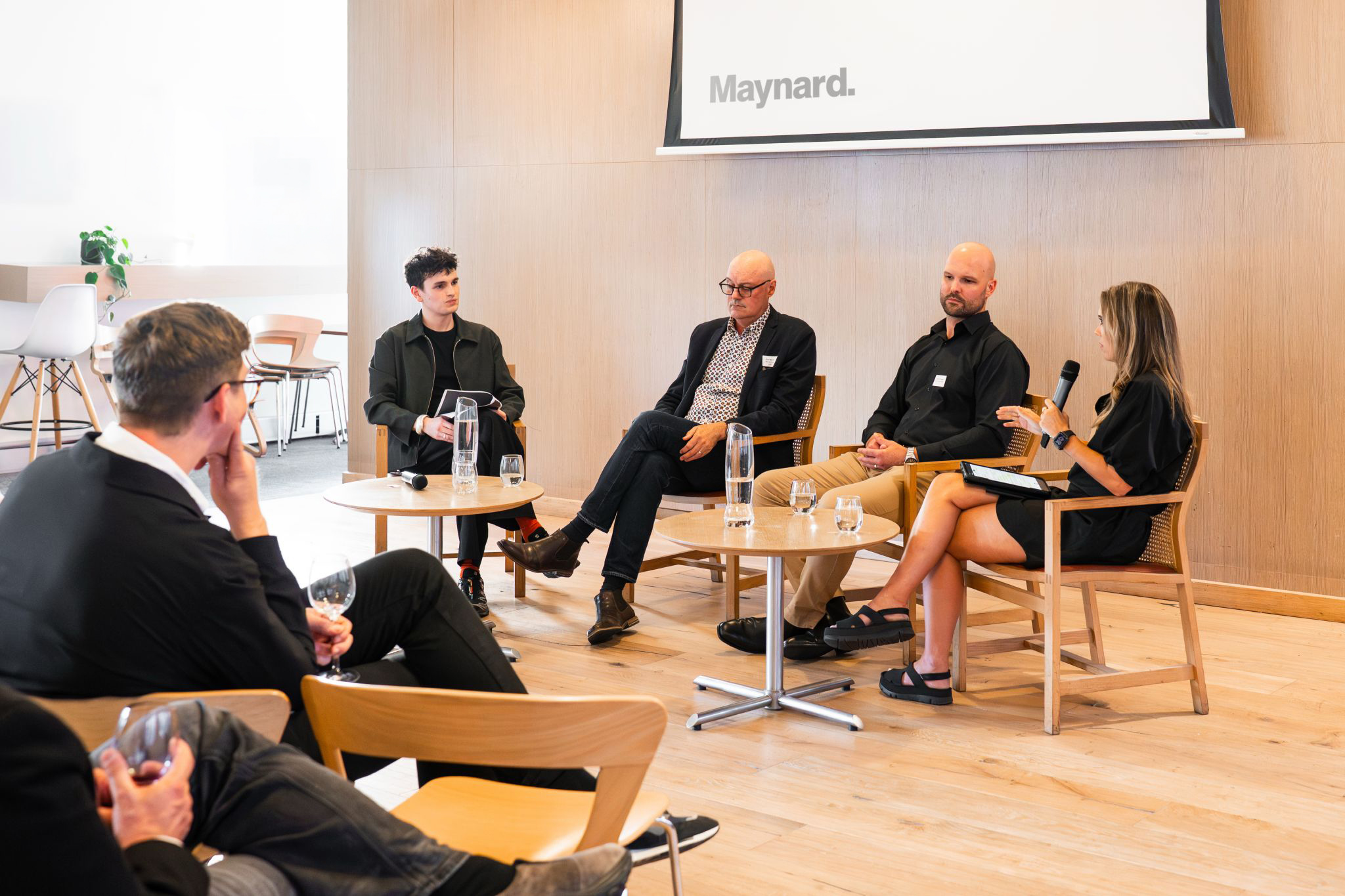
Following a discussion Maynard hosted on what lies ahead for Melbourne’s transport of tomorrow, Zac Procter and Kate Pleban caught up to unpack the ambitions of a truly mobile modern city.
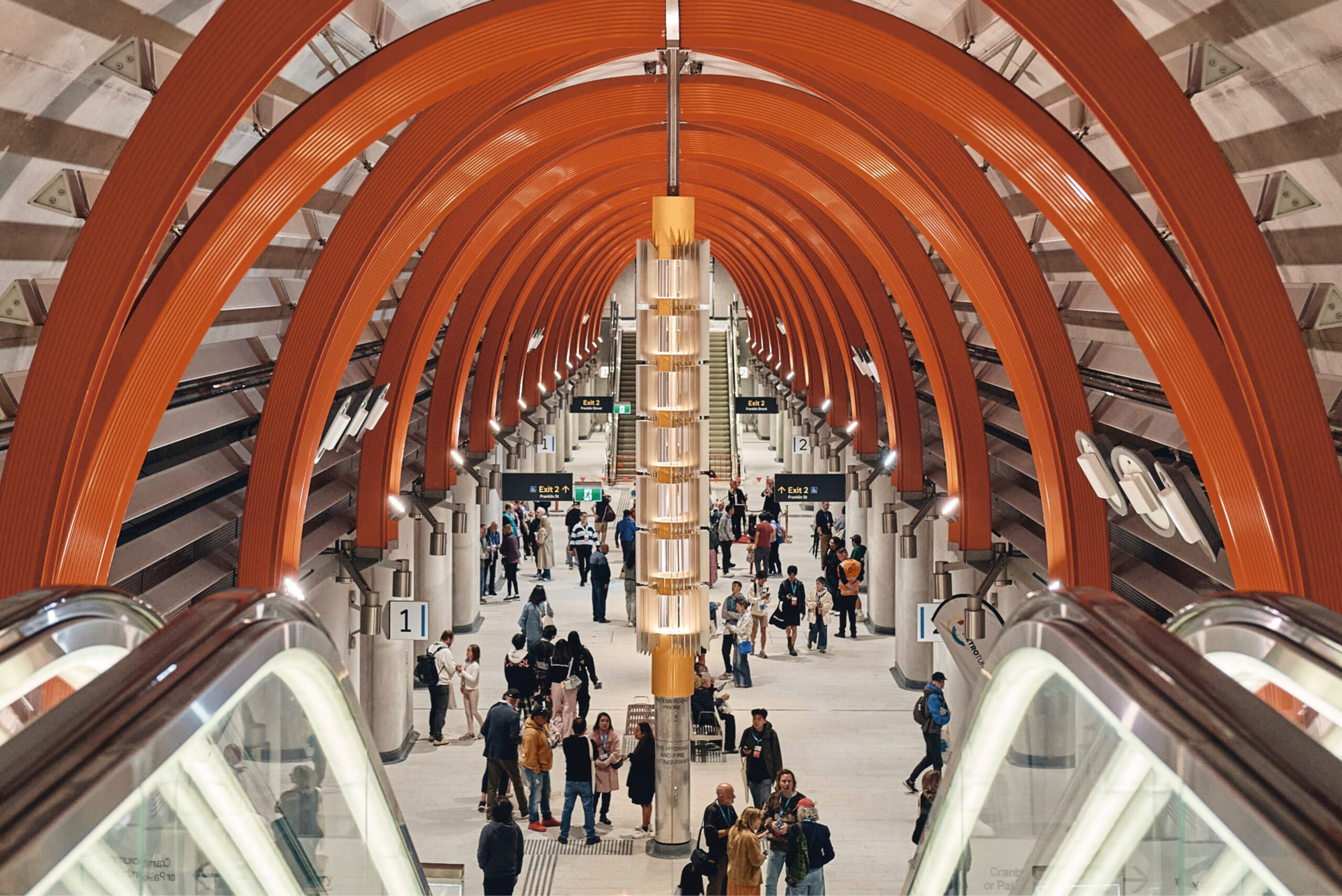
ZP: Great transport infrastructure is about far more than simply moving people from A to B; it plays a fundamental role in making cities social, accessible, and ultimately liveable. As a Melburnian, could you tell us about the response to the opening of the new metro?
KP: The big thing I’m noticing is this genuine excitement about the architecture and the public spaces in and around the stations. People aren’t just rushing through the stations – they’re lingering, exploring, taking photos, and using the stations as generous civic spaces rather than just a means to get from A to B. We have to remember that these huge patches of the city have been hoarded up for years, so there’s this sense of people finally being able to ‘reclaim’ parts of their city. It’s lovely to watch.
In terms of the network and services, there are of course some teething issues: after all, we’ve introduced a new mode, changed travel patterns and timetables, and created underground interchanges in the CBD for the first time. So naturally there is going to be an adjustment period while people learn and adapt to the changes that have occurred.
What I love most about the new metro system is how it has changed people’s perception of what feels ‘close’. Areas that were previously awkward to get to, such as Domain or Melbourne Uni, suddenly feel really connected. That’s something we’ve seen with Sydney Metro as well, with places like Barangaroo suddenly becoming very accessible. This opens up new possibilities for people as they move across the city.
ZP: Many major transport projects prioritise and transform our inner cities first. How do we make sure they genuinely improve life for outer‑suburban communities too?
KP: The first thing to acknowledge is that projects like the Greenline and Melbourne Metro are far from ‘one‑size fits all’ solutions. But what they’re successful in is sending a clear signal about our values – that public transport, active travel, and connection to the river are central to Melbourne’s brand, identity, and priorities as a city. They also serve as a catalyst for further improvements in these areas.
These projects are for us now, as much as they are for future generations. We may not, in fact, see the full benefits of these projects for decades, until other missing pieces such as Melbourne Airport Rail, Suburban Rail Loop, and Melbourne Metro 2 are all connected and working together as one seamless system.
For outer‑suburban communities, the real challenge is making sure people at least have a genuine choice of public transport rather than defaulting to their cars. That means frequency, connection, and local access all need to stack up so public transport feels viable in everyday life – not just on specific occasions, like taking the family to the football.
ZP: If we zoom out and ask bluntly, “What’s next for Melbourne?”, what are the two or three big shifts we absolutely have to get right?
KP: We need to give as much attention to upgrading public transport as we do to roads. Melbourne Airport Rail should be an absolute non‑negotiable, and the Suburban Rail Loop is another critical piece of that puzzle.
At the same time, we have to start planning with health and wellbeing front and centre. That means getting people out of their cars where possible, and designing neighbourhoods that create opportunities for incidental social contact and daily exercise. If we can do those two things well – sustained investment in public transport, combined with urban design that enables healthy, sociable daily routines – we may begin to see some behavioural change.
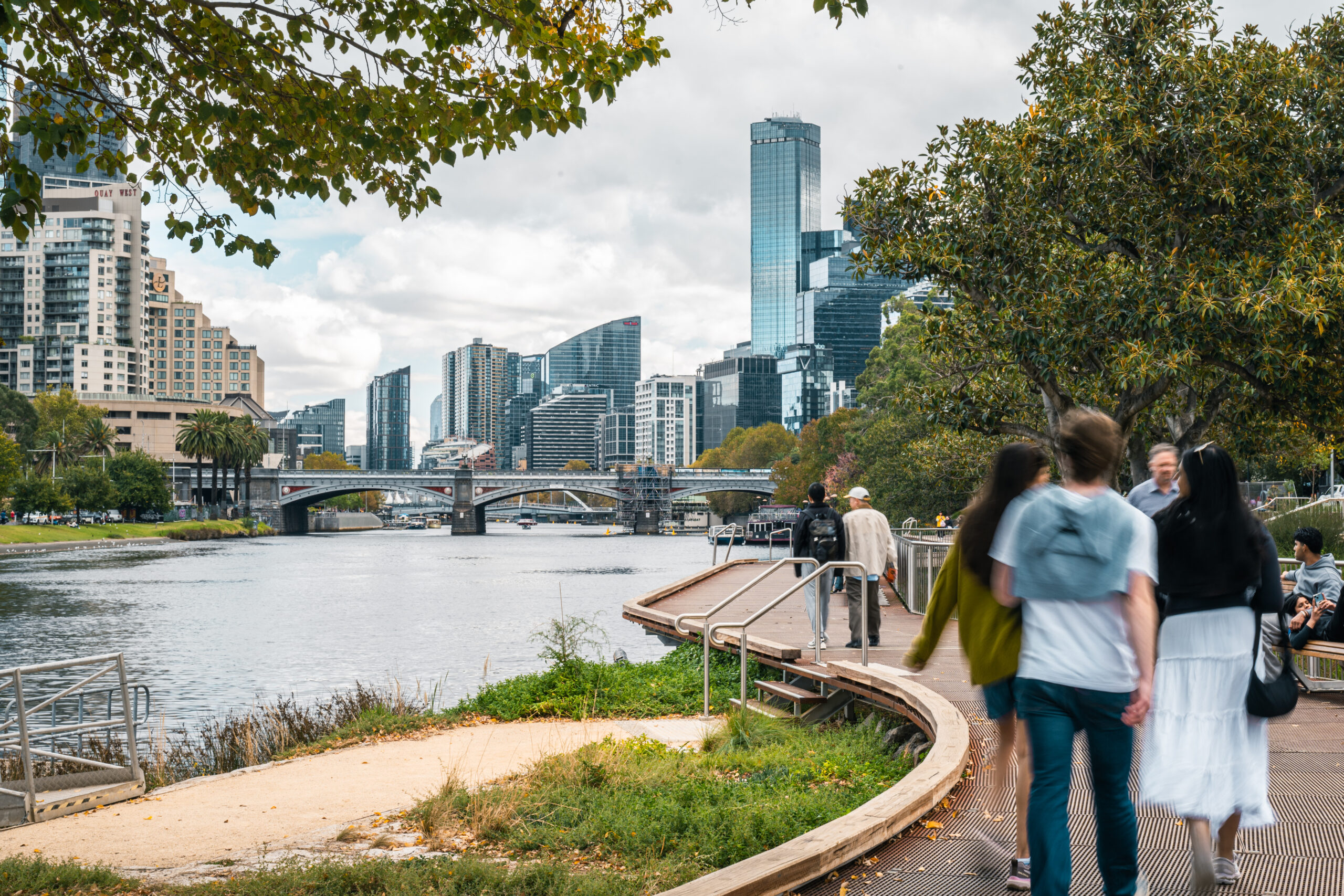
ZP: Often the benefits to our health come not from the train ride itself, but from what happens at either end – the walk, the wait, the ‘in-between’. From a public health perspective, where do major transport projects most often miss opportunities to support better daily movement?
KP: At the moment, we don’t support onward journeys by walking, cycling, or micromobility nearly as well as we could. Too often, the connections to and from stations are treated as an afterthought – with narrow footpaths, missing crossings, and hostile traffic environments. If we want to encourage people to use public transport, we must ensure that the journey to the station and the facilities provided at those stations truly enable that. The last mile is usually the weakest link, as it’s really tricky to service everybody right to their front doors.
In Australia, our local government boundaries often operate as hard edges that discourage joined‑up strategic thinking. The outcome is a disjointed walking and cycling network, with little consistency or continuity in the user experience. To address this, we need to look beyond individual jurisdictions and design around how trips actually feel and function on the ground, rather than how they appear on paper.
ZP: Cities don’t stand still, even if infrastructure does. How should we be designing our cities to adapt to changes in climate, demographics, and the future needs of our neighbourhoods?
KP: It’s true that big pieces of infrastructure can feel pretty fixed, but that doesn’t mean our stations have to be frozen in time. We can design them to adapt and evolve over decades. A big part of that is getting better at collecting and using data – through sensors, user feedback, or simple behavioural observation – and then feeding these insights into iterative changes, rather than treating infrastructure as ‘set and forget’. Timetables can shift, passenger information can be refined, circulation can be adjusted; the network as a whole can adapt as cities evolve.
If we take this iterative mindset seriously, stations become more like living parts of the city that continue to respond to new patterns of use, heat and climate risks, and changing neighbourhood needs, rather than monuments to a single moment in time.
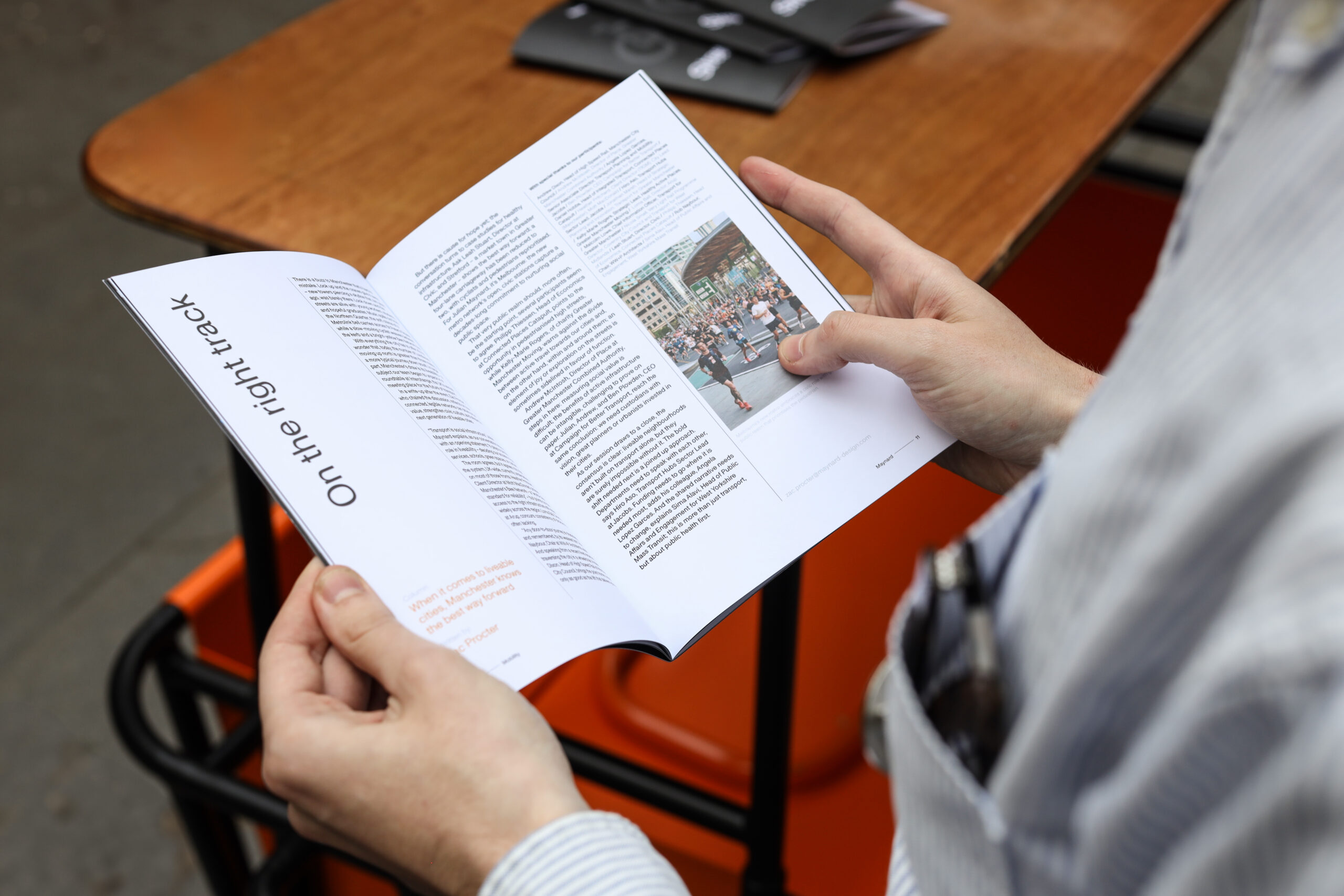
To read more from our columnists, download a copy of our editorial publication on mobility here. And reach out to Zac Procter if you'd like a print edition in the mail.
ZP: Melbourne Metro is a project our teams first started work on a decade ago. For Melburnians, what will success actually look and feel like on the ground in another decade’s time?
KP: Well, first of all, a decade is not a very long time; time flies when you’re having fun. But I think success will come when public transport and active travel become the default choice, not the exception. People will choose the train, tram, bus or bike because they are simply the faster, more reliable and more pleasant ways to get around. That has to be true not only for inner-city residents, but for people living in the outer suburbs as well. We’re talking about a continuous, high-quality, and reliable public transport system that works as a coherent network, rather than a patchwork of disconnected projects.
On top of that, I’d love to see 20‑minute neighbourhoods become standard – places where your station, local shops, schools and parks are all within easy walking or cycling distance. If we can get there, we’ll have a cleaner, calmer city that supports healthier lives almost by default.