
Airport experience starts long before the check-in desk
Walking through inner city Melbourne with my four-year-old niece, she turned to me, puzzled, and asked if we were at the airport. We weren’t, but she pointed down the street: “There are the yellow cars that take us to the airport.”
My niece is now fourteen, and those ‘yellow cars’ still take her to the airport. That confusion, at just four, captures the frustration of many Melburnians to this day, who lack any direct train to the terminals. Now, more than half a century on from the airport opening, we remain dependent on taxis, buses, cars – and expensive parking – while comparable cities are light-years ahead of such basic civic infrastructure.
The best get it right: Hong Kong, Zurich, Sydney, London, Tokyo. Step off the tarmac, and make your way seamlessly into the city centre. Hong Kong’s efficient airport express, or Zurich’s barely ten-minute transfer, are an immediate indicator of competence, confidence, and investment-ready connection from the moment you touch down – wherever you’re coming from.
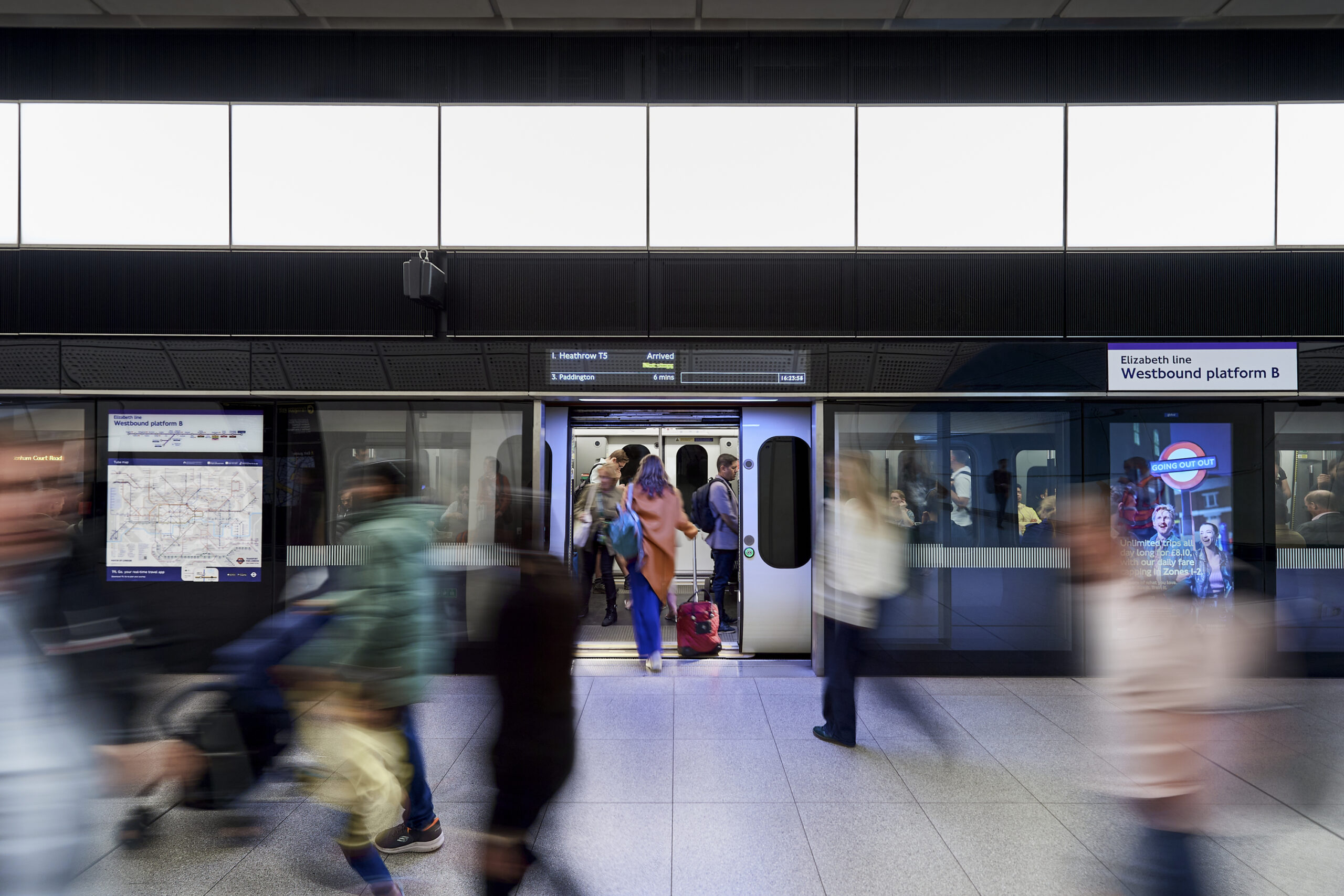
Pictured: The Elizabeth Line has transformed the way Londoners reach the airport.
It’s no coincidence that both cities are major magnets for international business.
And it’s not just about efficiency of movement. Waterloo Station on Sydney’s new metro, or London’s landmark city-wide Elizabeth Line – both projects our team has seen from early vision to completion – mark an unmistakable architectural statement and contribution to civic space.
They shape an instant immersion into the life of a local place that offers a layered and lasting sense of its character and ambition – an experience that, from the interior of a taxi, is missed entirely.
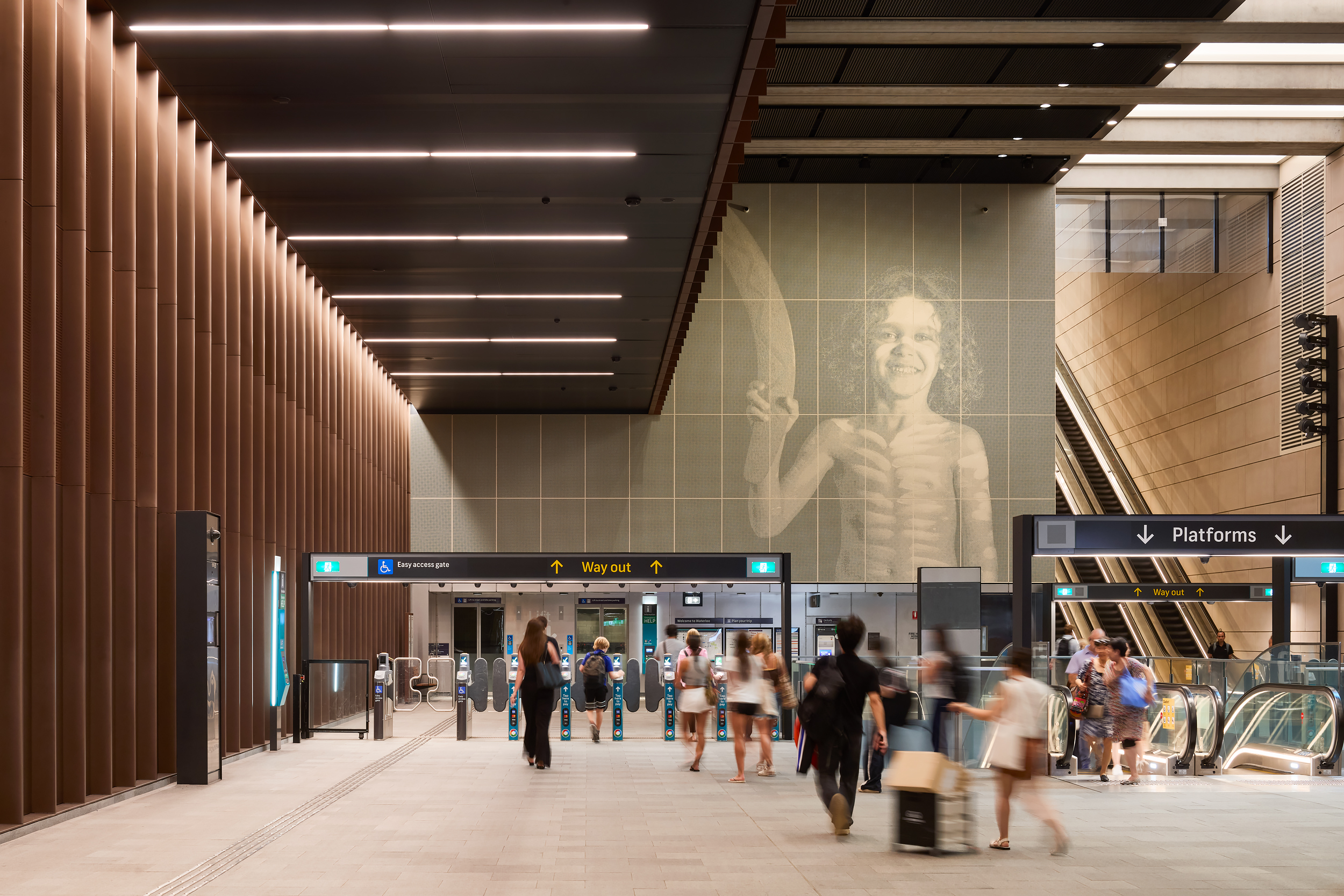
Pictured: The architecture of arrival at Waterloo Station by John McAslan + Partners and Maynard.
Illustrated by the ongoing development at New York’s JFK, airports invest billions in terminals, security screening, pricey food and beverage, a choice of lounge, and high-end retail. Yet the end-to-end passenger experience to and from the airport – the part that happens on ordinary streets, buses, and trains – is too often passed over in planning and design.
For many travellers, especially those with children, reduced mobility, or tight budgets, that journey is the most stressful of the trip.
The research is clear: ‘ground access’ accounts for more than fifty per cent of total journey anxiety. The unpredictability of traffic, fear of missing flights, difficulty finding or paying for parking, and confusing points of interchange consistently rank as top stress points for passengers.
As Australia gears up to host the 2032 Olympic and Paralympic Games, Brisbane has an opportunity to improve the city’s joined-up journey. For the benefit of athletes and spectators alike, we should take learnings from Games past; many of Athens’ 2004 stadiums and Rio’s of 2016 have fallen into disuse and disrepair, as an impact of missing infrastructure.
But in Barcelona on the other hand, more than ninety per cent of the facilities used in the 1992 Games remain in use decades later, with a vast number continuing to serve the city for sports, music, and, recently, as a temporary home for FC Barcelona.
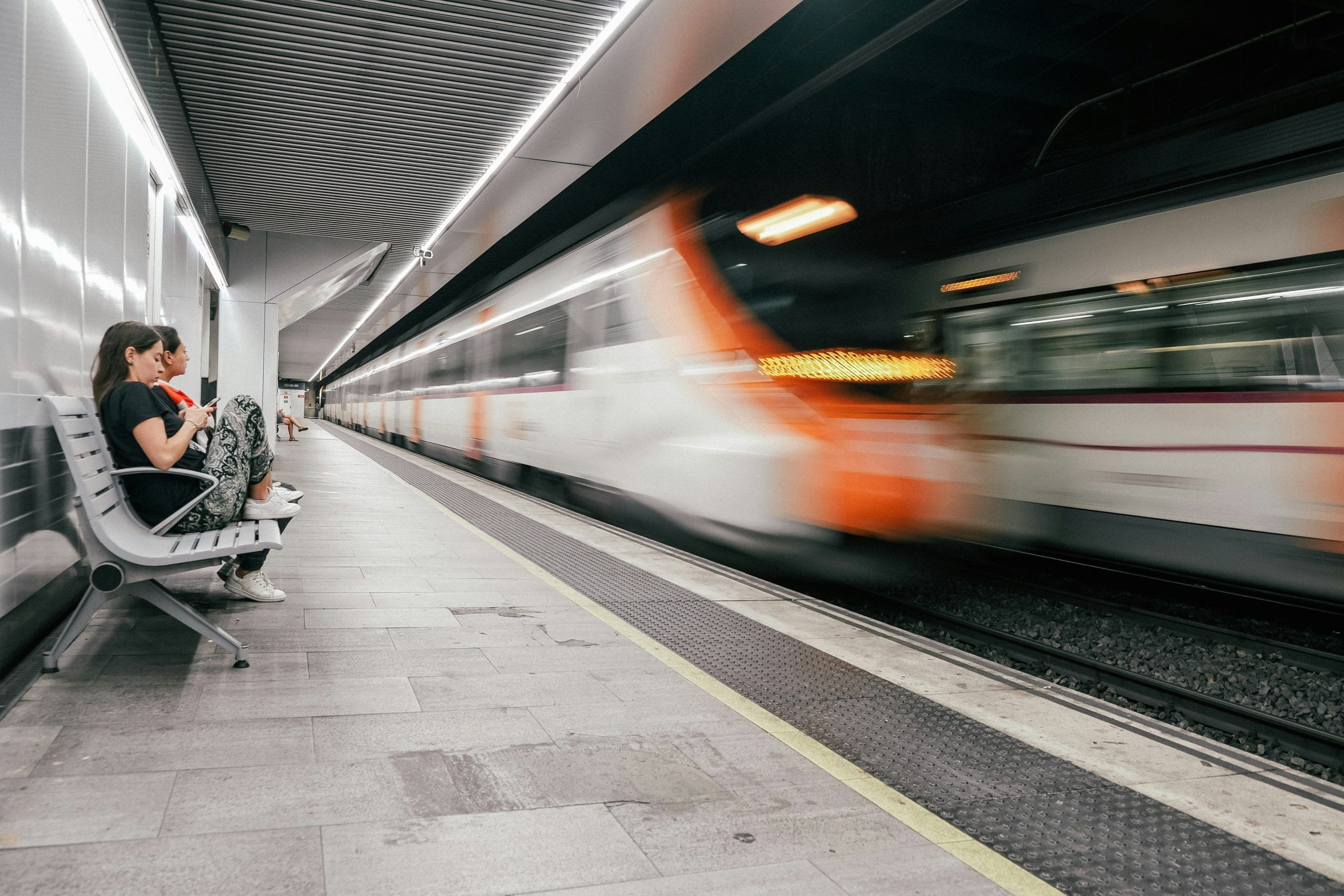
Pictured: Barcelona's RT Airport link.
Journeys from the airport to the city centre, and the hotel or venue beyond, should present to passengers an invitation rather than an obstacle. The future of Brisbane as an authentically liveable city – the very subject of an industry roundtable our team has just hosted – depends on it.
In practice, that means rail, metro, buses, and routes for walking or cycling are understood as one connected ecosystem – not individual initiatives. In this model, signage and wayfinding, information and customer touchpoints, well-designed points of interchange, as well as access and inclusivity, are not merely technical details. They are necessary tools for building calm, trust, and confidence.
For Brisbane, just in front of us is a rare chance to fast-track airport-city-venue connections for a legacy that endures long after the Games are gone.
If we succeed, a future four‑year‑old will stand in a busy city street, watch a train glide past, and assume – with the same logic – that this is how you get to the airport.

Written by: Kate Pleban
To read more from our columnists, get your hands on our new editorial aviation brochure, Fast Track – out now. Get in touch with Zac Procter to secure a copy today.